Free Dental Symposium in Thessaloniki
Completed
Free one-day dental symposium on “New Developments in Modern Dentistry”: restorative treatment options, digitally guided dentistry and hands-on seminars.
in collaboration with
The Symposium
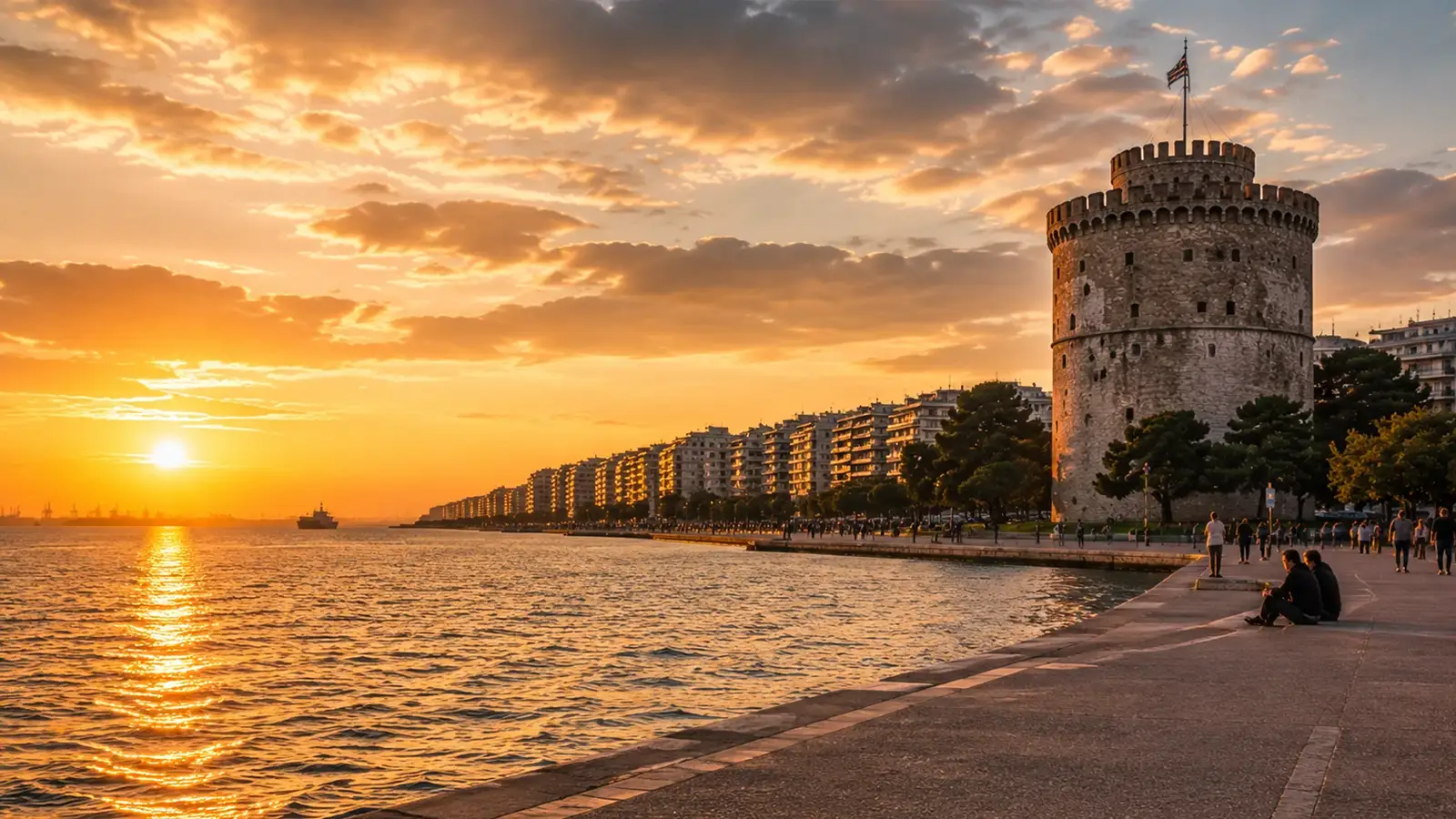
The free dental symposium “New Developments in Modern Dentistry” took place on Saturday 12 October 2019 in Thessaloniki, at the Grand Hotel Palace.
The morning programme included a round table on restorative treatment options, preparations and materials, and a presentation on digitally guided dentistry (“Bite Now – Smile Now” Digital Concept). Three parallel hands-on seminars followed in the afternoon. Attendance at the theoretical part was free for dentists, undergraduate and postgraduate students, and included stationery, a coffee break, a light lunch and a certificate of attendance.
Programme of the Day
Saturday 12 October 2019
Hands-on Seminars
In the afternoon, from 14:45 to 17:30, three parallel hands-on seminars took place. Participation cost €60, places were limited, and attendance at the theoretical part was a prerequisite.
The final impression is, by all accounts, the most stressful appointment, both for us and for our patients. Attention to detail at every step will lead us to predictable results, time and time again. To take impressions with ease and repeatability, and so create aesthetic restorations that stand the test of time, certain stages must be carried out correctly from the start of treatment. The health of the periodontal tissues is of the utmost importance. Careful preparations are also needed, as well as provisional restorations that respect biology. Finally, we should follow a simple tissue-preparation protocol. Applying these preparatory steps will give us the confidence we need at the impression appointment. At that appointment we must decide which impression technique to choose. Have we prepared the teeth for crowns and bridges, or for inlays/onlays? What should we watch for when there are subgingival areas? Is it 1–2 teeth or more? How can we control moisture? Do we have an assistant or not? With implants, is silicone or polyether superior? Do we prefer open-tray or closed-tray impressions? In the aesthetic zone in particular, how do we shape the soft tissues and then transfer this to our technician? Does a custom tray help? We will analyse all of the above together in the hands-on seminar, in order to solve, as far as possible, the problems we face. Finally, we will discuss a comprehensive impression protocol that presents every step of the most common and reliable technique.
During the seminar, the following clinical and laboratory procedures will be carried out:
Restoring hard-tissue defects in the anterior region is a procedure with high aesthetic demands, since any failure to reproduce natural anatomy and colour is immediately noticeable and has a significant effect on the patient’s psychology. Equally important, however, is reproducing the correct anatomy of the functional palatal surfaces, since changes to the anterior functional envelope can affect not only the restoration but also the function of the stomatognathic system as a whole, at times with destructive consequences.
The theoretical part will discuss methods for copying, diagnosing and reproducing the anterior guidance, ways to achieve a predictable result when we choose to modify it, and methods for recording and reproducing micro-anatomy and colour.
The hands-on part will include practice in restorations using a silicone key and a layering technique, as well as discussion of various options and clinical scenarios.
During the three-hour hands-on seminar, all stages of digitally guided dentistry will be analysed in detail: starting from CBCT analysis, moving on to the diagnostic wax-up (Virtual Wax-Up), composing the smile design, and arriving at the fabrication of the surgical guide for digitally guided implant placement.
Completing the treatment plan, we will arrive at the delivery of the final implant-supported restoration, which is also digitally guided. Participants will practise all of the above on special digitally printed models.
Speakers
The symposium speakers and the hands-on seminar instructors.
Venue
Grand Hotel Palace
The symposium took place at the Grand Hotel Palace, 305 Monastiriou Street, 54628 Thessaloniki.